
Stop Sneezing with These Allergy-Safe Indoor Plants
Can Houseplants Actually Help With Allergies? (Here’s the Short Answer)
Houseplants for allergy sufferers can genuinely help reduce indoor allergens — but only if you choose the right ones.
Here are the best allergy-safe options to start with:
| Plant | Key Benefit | Pet-Safe? |
|---|---|---|
| Snake Plant | Absorbs CO2 at night, low pollen | Yes |
| Peace Lily | Traps mold spores, humidifies air | No |
| Spider Plant | Removes VOCs, very low allergen risk | Yes |
| Areca Palm | Natural humidifier, dust trapping | Yes |
| Bamboo Palm | Filters toxins, rarely flowers indoors | Yes |
| Chinese Evergreen | Low pollen, thrives in low light | No |
| ZZ Plant | Waxy leaves repel dust, virtually no pollen | No |
If you love greenery but dread the sneezing that sometimes follows, you’re not alone. Tens of millions of people deal with indoor allergies made worse by poor air quality at home.
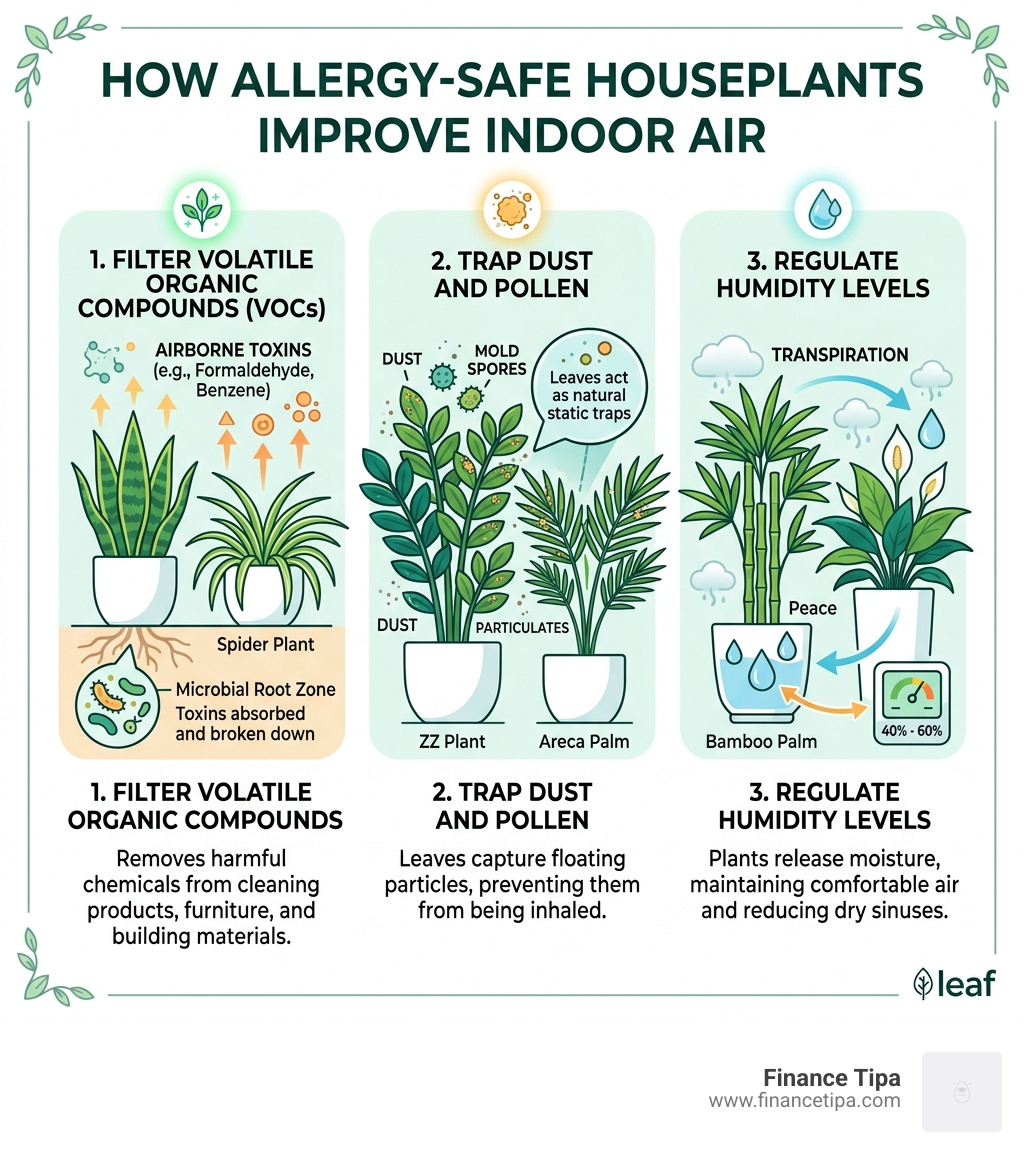
Here’s the thing most people don’t realize: not all houseplants are created equal when it comes to allergies. Some plants release airborne pollen that can trigger symptoms in a closed indoor space. Others — the ones on the list above — rarely flower indoors, produce little to no airborne pollen, and can actually trap dust, mold spores, and volatile organic compounds (VOCs) on their leaves.
NASA’s 1989 Clean Air Study found that certain houseplants remove toxic agents like benzene, formaldehyde, and trichloroethylene from indoor air. Their recommendation? At least one plant per 100 square feet for meaningful air-cleaning effects.
The key is knowing which plants help — and which ones quietly make things worse.
The Science Behind Houseplants for Allergy Sufferers
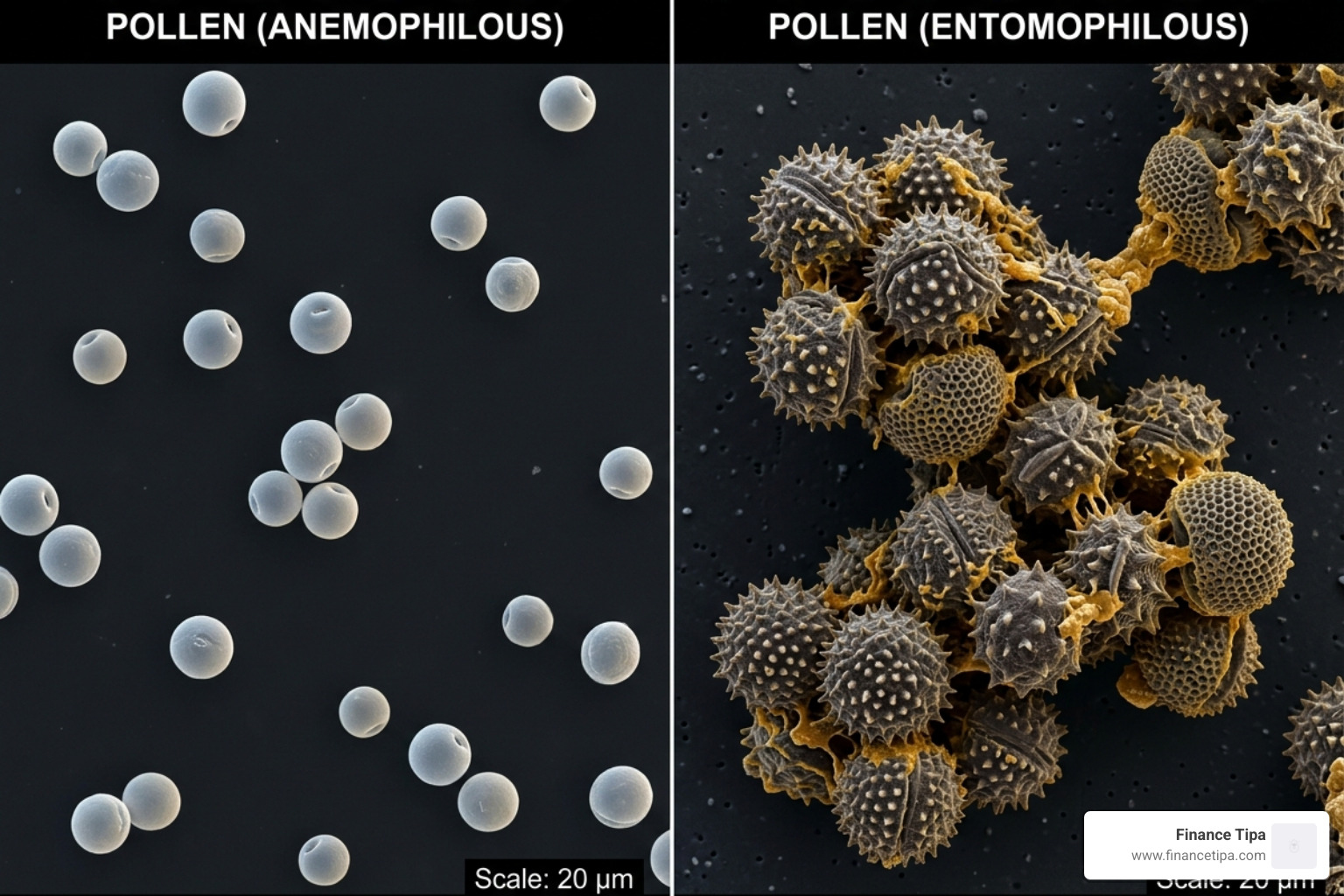
To understand why some plants make us sniffle while others help us breathe, we have to look at how they reproduce. In the botanical world, there are two main ways pollen travels: wind and insects.
Wind-pollinated plants are the primary villains for allergy sufferers. They produce massive amounts of tiny, lightweight pollen grains designed to float through the air for miles. When these plants are brought indoors, that pollen becomes concentrated in our living spaces. On the flip side, insect-pollinated species have heavy, sticky pollen that doesn’t go airborne easily. Most of our favorite houseplants for allergy sufferers fall into this second category or don’t flower indoors at all.
Understanding the OPALS Scale
When we evaluate a plant’s “sneeze-factor,” we look at the Ogren Plant Allergy Scale (OPALS). This system rates plants from 1 to 10. A score of 1 means the plant is highly unlikely to cause an allergic reaction, while a 10 means you should probably stay far away if you have hay fever. Most of the plants we recommend sit comfortably in the 1–3 range.
More Than Just Pollen: VOCs and Humidity
It isn’t just about what the plants don’t do; it’s about what they actively achieve for our indoor ecology.
- VOC Removal: Household items like carpets, cleaners, and furniture off-gas Volatile Organic Compounds (VOCs) such as formaldehyde and benzene. These chemicals irritate the respiratory tract, making allergy symptoms feel much worse.
- Transpiration and Humidity: Plants “sweat” through a process called transpiration. This naturally increases indoor humidity. Maintaining a relative humidity between 40–60% is the “sweet spot” for human health—it keeps our nasal passages moist and less susceptible to allergens, without being damp enough to encourage mold.
- Phyllosphere and Root Microbiomes: The “phyllosphere” (the leaf surface) and the beneficial bacteria in the soil work together to break down airborne pollutants. Some plants are even evolutionarily optimized to trap mold spores directly from the air.
Top Recommended Houseplants for Allergy Sufferers
When we look at the data from NASA’s 1989 study and more recent horticultural research, a few champions emerge. These plants are selected for their ability to filter the “big three” toxins—benzene, formaldehyde, and trichloroethylene—while remaining low-pollen.
If you are looking for a guide to allergy-friendly greenery, you should prioritize species with smooth, glossy leaves. These are much easier to keep clean than fuzzy-leaved plants, which tend to act like dust magnets.
Snake Plant: The Nighttime Oxygen Booster
Commonly known as “Mother-in-law’s tongue,” the Snake Plant is a powerhouse for any bedroom. Most plants take in CO2 and release oxygen during the day, but the Snake Plant uses Crassulacean Acid Metabolism (CAM) photosynthesis. This means it actually absorbs CO2 and releases oxygen at night, which can help you breathe better while you sleep.
Beyond oxygen, research shows that Snake Plants can reduce airborne endotoxins by up to 32% in controlled environments. They are incredibly low-maintenance, thriving even if you forget to water them for a few weeks. For the best allergy-safe indoor plant tips, we suggest grouping three to five of these together in a corner to maximize their air-scrubbing potential.
Peace Lily: A Natural Humidifier and Mold Fighter
The Peace Lily (Spathiphyllum) is one of the best plants for clean air because of its high transpiration rate. It acts like a natural, silent humidifier, which is a godsend for those with dry, irritated sinuses during the winter months.
A unique benefit of the Peace Lily is its “phyllosphere efficiency.” Its large, waxy leaves are specifically adapted to trap airborne mold spores. In one study, rooms with mature Peace Lilies saw a 41% reduction in viable mold spores. While they do produce flowers, their pollen is heavy and sticky, meaning it rarely becomes airborne. However, if you are extremely sensitive, you can simply snip the blooms off at the base as soon as they appear. Note: These are toxic to pets, so keep them on high shelves.
Best Palms for Houseplants for Allergy Sufferers
Palms are fantastic because they don’t produce the fine dust or pollen associated with many other large indoor trees.
- Areca Palm: Often called the “world’s best humidifier,” a large Areca palm can release up to a liter of water into the air every 24 hours.
- Lady Palm: These are resistant to most common plant pests and are excellent at filtering ammonia, which is often found in household cleaning products.
- Bamboo Palm: These thrive in indirect light and are highly effective at removing formaldehyde.
Indoor Plants to Avoid: The Worst Offenders for Allergy Sufferers
Sometimes, the “clean air” lists you find online can be misleading. Just because a plant removes toxins doesn’t mean it’s safe for someone with severe allergies.
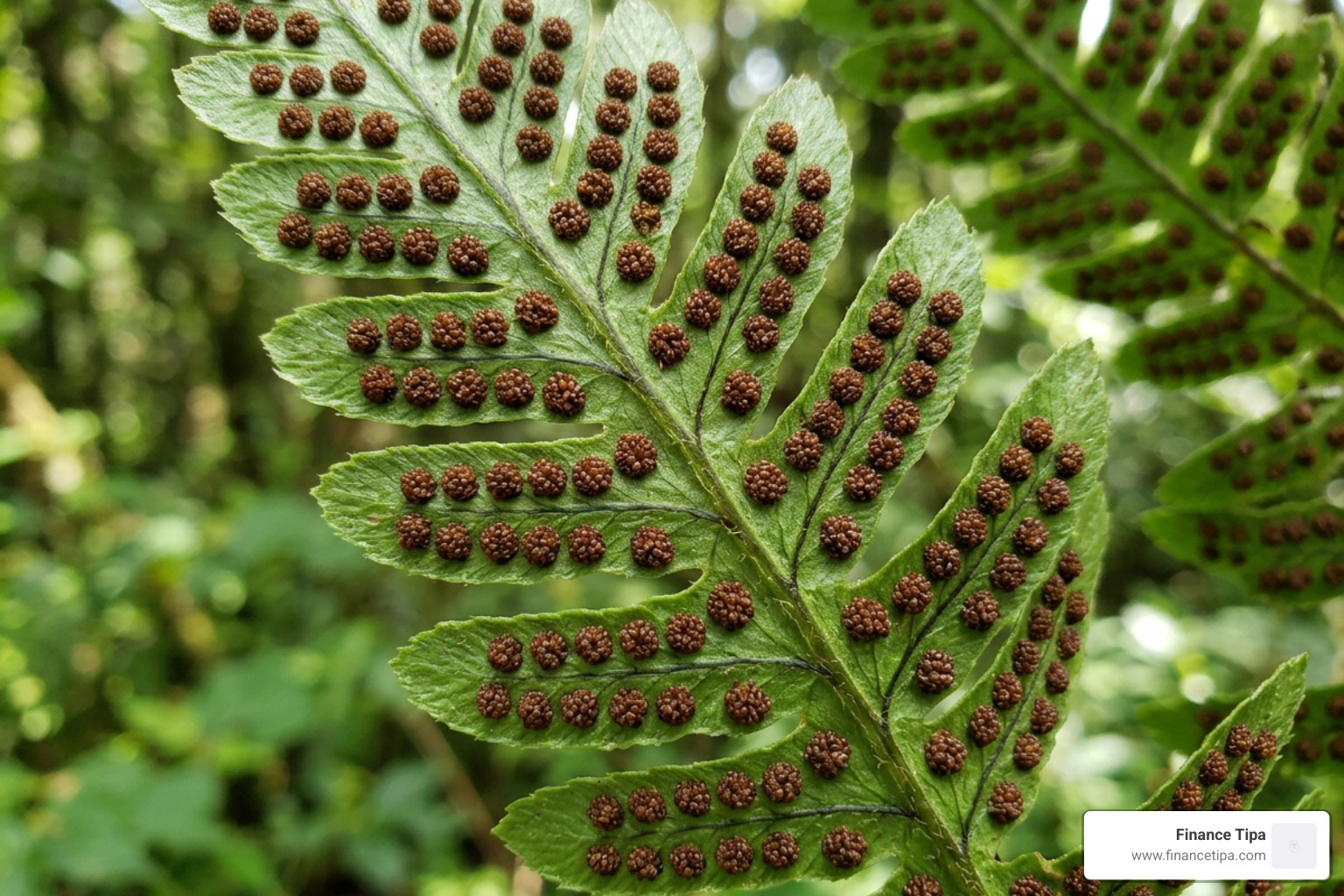
1. Ferns (The Spore Factor): While beautiful, many ferns (like the Boston Fern) reproduce via spores. These tiny particles are released into the air and can trigger sneezing and itchy eyes just like pollen does. 2. Weeping Fig (Ficus benjamina): This is a very common indoor tree, but it’s a major allergen. The sap contains latex-like proteins that can become airborne when the plant is pruned or when leaves drop, causing respiratory distress or skin rashes. 3. Yucca: These can cause skin irritation and are known to be a trigger for some asthma sufferers. 4. English Ivy: While it filters toxins, English ivy produces allergenic glycoproteins. Studies have shown that up to 22% of allergy patients react poorly to this plant. 5. Flowering Plants with High OPALS Ratings: Avoid indoor jasmine, male bonsai trees, or any plant with small, “fuzzy” flowers that shed yellow dust.
Essential Care Tips to Keep Your Home Pollen-Free
Even the most allergy-friendly plant can become a problem if it’s covered in dust or sitting in moldy soil. Proper stewardship is the difference between a healthy home and a sneezing fit.
The Damp Cloth Technique
Dust is one of the most common indoor allergens, and plant leaves provide a huge surface area for it to settle on. We recommend wiping your plant leaves once a week with a damp microfiber cloth. This doesn’t just help your allergies; it also helps the plant “breathe” and photosynthesize more efficiently. Avoid using “leaf shine” products, as these can trap dust and clog the plant’s pores.
Preventing Mold in the Soil
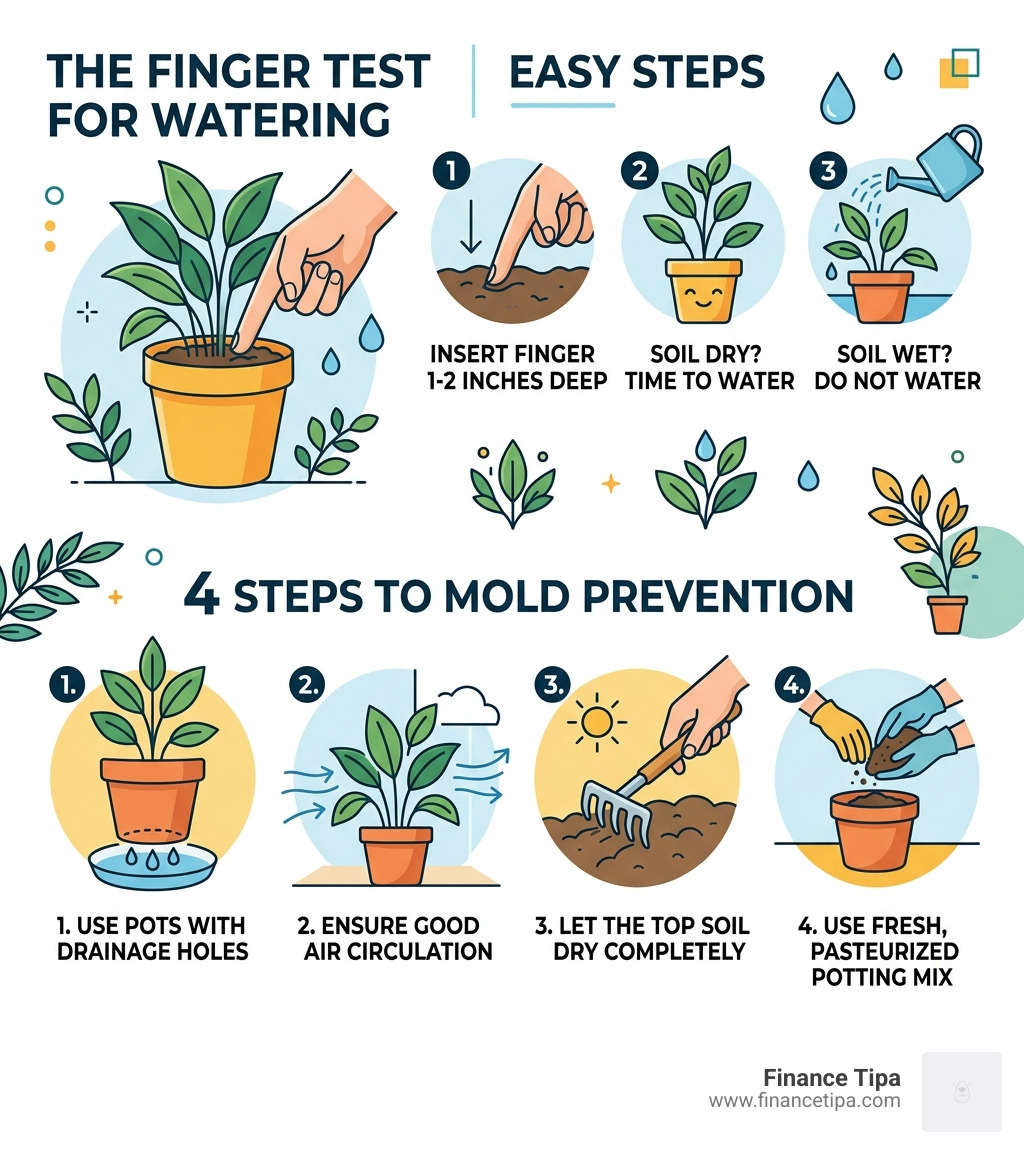
Overwatering is the #1 cause of mold growth in houseplants. If you see a white, fuzzy film on your soil, that’s mold, and it’s likely what’s making you sneeze.
- Watering Schedule: Only water when the top 1–2 inches of soil are dry.
- Drainage: Always use pots with drainage holes and well-draining soil (add perlite if necessary).
- Sterilization: When repotting, use fresh, pasteurized potting mix rather than soil from your garden.
Monitor Your Environment
We highly suggest using a digital hygrometer to monitor your indoor humidity. Aim for that 40–60% range. If it climbs above 65%, you are inviting black mold to grow in your home; if it drops below 30%, your nasal passages will dry out, making you more sensitive to any stray pollen.
Integrating Plants with Home Air Quality Systems
While we love our leafy friends, they work best as part of a “team” approach to indoor wellness. In a typical home, you’d need a literal jungle to replace a high-quality mechanical filter.
For maximum relief, we recommend the following:
- The 100 Square Feet Rule: Aim for at least one medium-sized plant (6–8 inch pot) for every 100 square feet of living space.
- Upgrade Your Filters: Most standard 1-inch HVAC filters only capture about 10% of large particles. Upgrading to a 4-inch pleated filter or a system like PureAir can filter out more than 95% of small particles down to 0.3 microns.
- Habit Stacking: Complement your plants by going barefoot at home to avoid tracking in outdoor pollen. Showering at night is also a game-changer—it washes the day’s pollen out of your hair so you don’t rub it into your pillow.
Frequently Asked Questions About Allergy-Safe Plants
How many plants do I need per room for air purification?
Based on NASA’s research and subsequent studies, measurable air-quality improvement usually begins at 1 plant per 100 square feet. For a standard bedroom (120–150 sq. ft.), 3 to 5 plants of varying heights will provide the best results for both toxin filtration and humidity regulation.
Are these allergy-friendly plants safe for cats and dogs?
Not all of them. While Spider Plants, Areca Palms, and Lady Palms are generally non-toxic, others like the Peace Lily, Snake Plant, and ZZ Plant can cause stomach upset or irritation if chewed. Always check the ASPCA list before bringing a new plant into a home with pets.
Can houseplants replace a mechanical air purifier?
In short: No. While plants are excellent at removing gaseous toxins (VOCs) and adding humidity, they aren’t nearly as fast as a HEPA filter at removing heavy smoke or thick dust. We view them as a 24/7 “passive” filtration system that works best when paired with an “active” mechanical purifier.
Conclusion
At Finance Tipa, we believe that your home should be a sanctuary where you can breathe deeply and feel your best. By embracing biophilic design—the practice of connecting human spaces to the natural world—you aren’t just decorating; you’re building a foundation for better health.
Choosing the right houseplants for allergy sufferers is a journey of progressive improvement. Start small with a single Snake Plant or a hardy Spider Plant. Observe how your body responds over a few weeks. With the right species and a simple maintenance routine of dusting and careful watering, you can reclaim the joy of indoor greenery without the tissue box.
Ready to transform your home into a fresh-air oasis? Improve your indoor air quality today by following our latest tips on natural living and indoor wellness. Happy planting!
